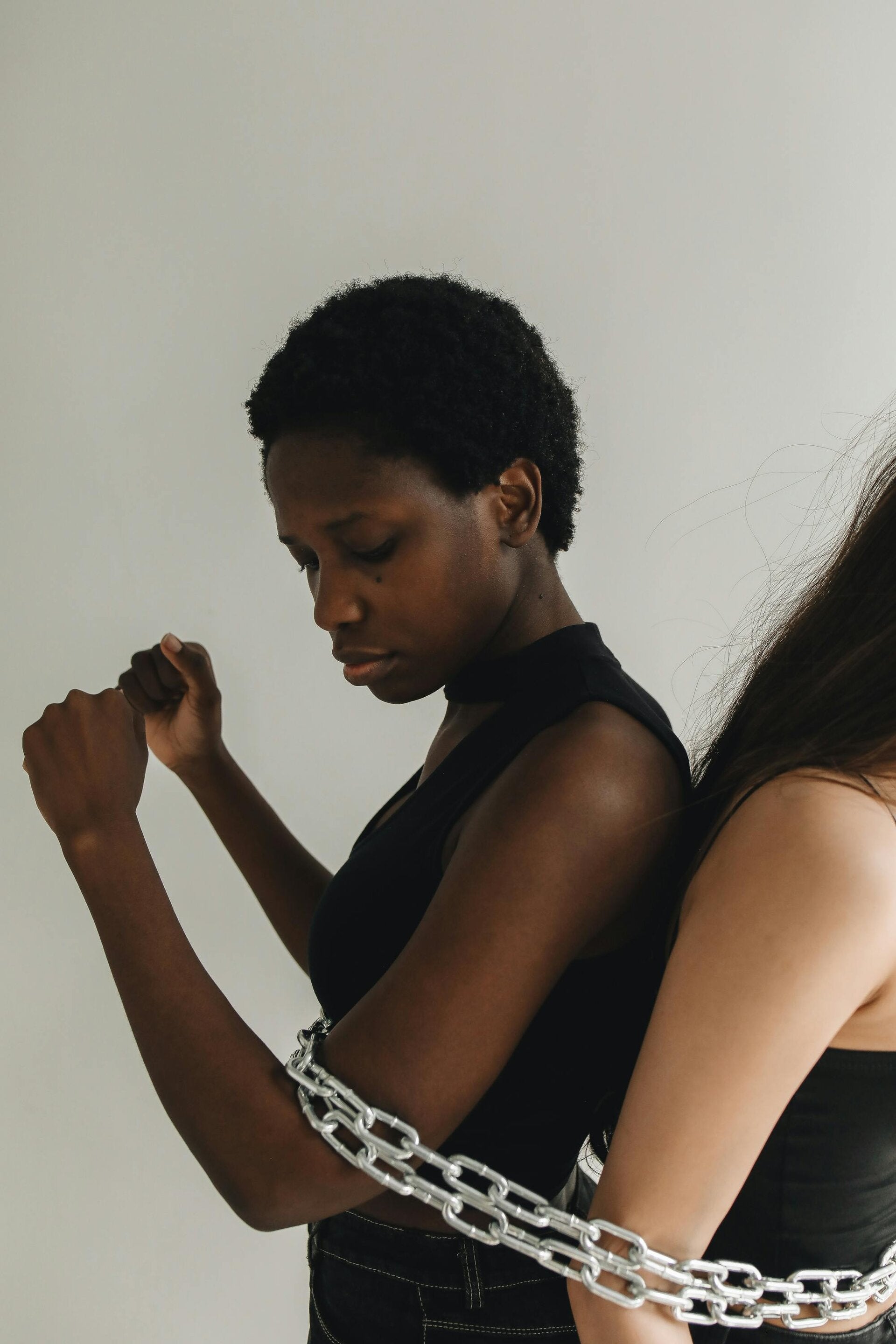
I've been sitting with something I've heard recently, and honestly, I've found myself conflicted. I'm not angry, and I certainly don't want to attack or demean anyone. I'm simply uncomfortable, and I think it's important that women are allowed to say that. Discomfort is real, and I believe we should be able to acknowledge it, sit with it, ask questions, and have honest conversations about why something makes us uncomfortable without immediately being labelled hateful, ignorant, or intolerant for doing so. There has been a recent conversation surrounding Drew Afualo's podcast about trans women and the experience of womanhood. Part of that conversation explored the idea that some trans women may experience femininity and womanhood in an especially intentional, joyful, and beautiful way because of the unique journey they have taken to embrace it. I can understand and appreciate the desire to celebrate that experience. I really can. Where I find myself uncomfortable, though, is when we begin comparing women's experiences of womanhood or suggesting that one experience is somehow more beautiful, meaningful, or authentic than another. Womanhood isn't one single experience, and it certainly isn't a competition. The beauty of it is that our experiences can be completely different and still be worthy of being heard, respected, and celebrated.
Can we talk about the word "cis"?
I want to say something that I suspect some women in my community have been thinking, but may be hesitant to say out loud. I didn't grow up calling myself a "cis woman." I grew up calling myself a woman. "Cisgender" is a legitimate descriptive term. I understand why it exists and why it can be useful when we're talking about the differences between the experiences of transgender and non-transgender people. It isn't inherently an insult, and I don't believe that using the word is hateful or disrespectful. At the same time, I think it's worth acknowledging that some women feel uncomfortable when a word they've never used to describe themselves suddenly becomes a qualifier attached to an identity they've understood very simply for their entire lives. For many women, "woman" was never something they needed to distinguish from anything else. It was simply who they were. Language matters. A word can be perfectly legitimate in its intended meaning and still feel unfamiliar, uncomfortable, or even diminishing to someone when it is applied to them. I don't think acknowledging that discomfort should automatically be interpreted as hostility toward transgender people. We should be able to talk about language, identity, and the feelings those things bring up honestly, respectfully, and without assuming the worst intentions in one another.
Because some of us have lived the hard parts of womanhood from the very beginning.
For many of us, womanhood wasn't something we consciously chose. It was something we grew into. It started with puberty. Our bodies changed, sometimes before we were ready for them to. We got our first periods and suddenly had to learn how to navigate a body that was doing things we didn't fully understand yet. We learned to keep a pad or tampon tucked away in our purse, just in case. We learned about pregnancy and childbirth. Some of us became mothers. Some desperately wanted to and couldn't. Some experienced miscarriage or infertility. Some chose not to have children. Some had abortions. And then there are the experiences we don't always talk about as openly, like the first time someone made an inappropriate comment about our bodies. The first time we realized we were being followed. The times we walked a little faster to our car, checked the back seat before getting in, or texted someone, "I'm home," simply so they knew we had made it safely. Some of us have experienced harassment. Some have experienced sexual assault. Some have changed the way we dress, where we go, or how we behave because we've learned that being a woman can sometimes mean thinking about our safety in ways we never should have had to. Eventually, our bodies change again. Perimenopause. Menopause. Hot flashes, mood changes, sleepless nights, changing bodies, and hormones that seem to have a mind of their own. Suddenly, we're navigating another entirely new stage of being a woman.
None of these things define what a woman is. Of course they don't. A woman's worth isn't determined by her body, her fertility, whether she has children, whether she menstruates, or whether she has experienced any particular form of hardship; they are part of the lived experience of millions of women. I honestly think that's where some of the discomfort in this conversation comes from. When we hear someone say, "Those things aren't what womanhood is about," I can understand what they may be trying to say. Perhaps they're reminding us that women are more than our bodies. We're more than our ability to have children. We're more than menstruation. We're more than the violence, discrimination, or hardships we've experienced. I completely agree. However, I think there's an important distinction between saying, "These things don't define women," and saying, "These things shouldn't be part of the conversation about women's experiences," because they absolutely are. They are part of the stories many of us have been living since we were girls. They have shaped how we understand our bodies, our relationships, our safety, our choices, and sometimes even how we understand ourselves. Acknowledging those experiences doesn't mean reducing womanhood to biology or suffering. It simply means making room for the reality that these experiences have been deeply significant in the lives of many women, and guess what? I think we're allowed to talk about those stories, too.
Womanhood can be beautiful AND difficult.
This is the part I think we're missing. Womanhood isn't beautiful because it's soft. It isn't beautiful because we're feminine, wear dresses, put on makeup, have children, or fit into some particular idea of what a woman is supposed to look like. And it certainly isn't beautiful because we've suffered. I think womanhood is beautiful because women are complicated, messy, strong, emotional, resilient, hilarious, exhausted, loving, stubborn, nurturing, independent human beings. We can love being mothers and still say, "I absolutely hated being pregnant." We can love getting dressed up and feeling beautiful, or live in sweatpants and not give a damn about makeup. We can be deeply feminine, not feminine at all, or somewhere in between. We can be mothers, daughters, wives, sisters, aunties, friends, caregivers, professionals, artists, athletes, leaders, introverts, loudmouths, tomboys, girly girls, and a million other things. Some of us will have children. Some won't. Some will desperately want them and never have them. Some will choose not to. Some of us will love every stage of getting older. Others will struggle with watching our bodies change. Some of us will feel deeply connected to our femininity. Others won't, but all of those experiences can exist within womanhood. Maybe that's what gets lost when we try so hard to define what womanhood is supposed to be. There isn't one experience that can speak for every woman. There isn't one way to be a woman, and there isn't one story that is more authentic than all the others. We don't all have the same story. We're simply writing our own stories under the very big, very complicated umbrella of womanhood. I honestly believe that there is something incredibly beautiful about that.
Please don't make my experience less beautiful to make someone else's more beautiful.
This is where I think the conversation went wrong for me. I can absolutely understand why a trans woman might feel an incredible sense of joy, freedom, and relief when she finally gets to live openly as herself. And honestly? I want her to have that. If she finally feels comfortable expressing herself in a feminine way, enjoys getting dressed up, discovers parts of herself she never felt free to express before, or simply feels at home in her identity for the first time, I don't want to take any of that away from her. I can celebrate that. I can respect that. I can even learn something from it. What I struggle with is the idea that celebrating one woman's experience somehow requires another woman's experience to be viewed as less beautiful. Why does my experience have to become less meaningful for hers to be meaningful? I don't need someone else's experience of womanhood to be the same as mine in order to respect it. And I certainly don't need to believe that someone else's experience is more beautiful, more authentic, or somehow deeper in order to appreciate what they've been through. My experience matters too. The things I've lived through matter. The things other women have lived through matter. Our experiences can be completely different without one of them needing to outrank the other.
That's where I think comparison becomes a problem. The moment we start saying, "This group of women understands womanhood better," or "This experience is more beautiful than that one," we're no longer simply sharing our experiences. We're ranking them. Haven't women had enough of being told we're not enough? We're too emotional. Too loud. Too old. Too young. Too feminine. Not feminine enough. Too sexual. Not sexual enough. Too much. Not enough. We really don't need to start doing that to each other. There should be room for a woman to say, "This is what womanhood has meant to me," without another woman feeling the need to respond, "Well, my experience is more beautiful than yours." Maybe we don't need to agree on every part of what womanhood means. Maybe we don't need every woman's experience to look the same. Maybe we simply need to listen to one another's stories without turning them into a competition. I don't believe that another woman's experience has to diminish mine for me to make room for hers. There is enough room under the umbrella of womanhood for both of our stories to be true, meaningful, and beautiful.
There are experiences we simply cannot understand from the other side.
A trans woman may have experiences surrounding transition, discrimination, dysphoria, rejection from family, navigating society while transitioning, being misgendered, or fearing violence that I will never personally understand. Those experiences are real, and they deserve compassion. At the same time, a woman who has lived her childhood and adolescence being treated as a girl has experiences that a trans woman may not have personally lived either. Growing up with the social expectations placed upon girls. Going through female puberty. Being sexualized as a young girl. Learning the rules girls are often taught about safety. Experiencing menstruation. Navigating pregnancy, childbirth, and postpartum changes. Going through perimenopause and menopause. Being treated differently because of a female body. Those experiences are real too. Neither experience needs to erase the other. This is where I think nuance matters so much. I don't believe every trans woman has experienced the world in the same way, just as no group of women shares one universal experience. Transition, age at transition, appearance, race, class, sexuality, family circumstances, and countless other factors can shape someone's experience enormously. I also think it's possible to acknowledge that someone who was raised or perceived as male may have experienced certain aspects of the world differently before, during, or after transition, without using that acknowledgement to diminish her identity or worth. Acknowledging differences in our histories isn't hatred. It's simply recognizing that our experiences shape us. A trans woman's history may include experiences that I will never understand firsthand. My history may include experiences that she will never understand firsthand. Neither of us needs to have lived the other's story in order to treat the other with dignity, compassion, safety, and respect. Acknowledging that some women may have experienced aspects of male socialization does not make them less deserving of womanhood, dignity, or belonging. It simply means that their experience of womanhood isn't automatically the universal experience of womanhood. Just like mine isn't. Maybe that's the nuance we need more of: different experiences don't have to mean different worth.
We need each other more than we need another argument.
The thing that makes me saddest about conversations like this is how much division women are already navigating. We are fighting about our bodies. Our reproductive rights. Our safety. Our workplaces. Our children. Our bathrooms. Our healthcare. Our prisons. Our schools. Our sexuality. Our appearance. Our age. Our motherhood. Our choices. So why is it that in some spaces, we're fighting over whose experience of womanhood is the "right" one. Meanwhile, women everywhere are still trying to figure out how to feel safe walking home. How to be taken seriously at work. How to raise our daughters in a world that can still teach them their value is measured by how desirable they are. How to navigate changing bodies without feeling ashamed of them. How to grow older without being made to feel invisible. How to exist in a world that has spent generations asking women to make themselves smaller. There is already so much that can divide us. I don't think we need another hierarchy of womanhood, where one woman's experience has to be elevated by placing another woman's experience beneath it. I think we need something different. We need room for different stories. We need the ability to disagree without assuming hatred. We need curiosity instead of accusation. We need compassion for experiences we may never personally understand, and more than anything, I think we need solidarity. Not because we are all the same, but because we aren't. We are different women, with different histories, different bodies, different struggles, different joys, and different ways of understanding ourselves. Perhaps solidarity doesn't require us to erase those differences. Perhaps it simply means deciding that those differences don't have to stop us from standing beside one another.
To the women in my Esteem Team…
If you watched that podcast and found yourself feeling uncomfortable, I want you to know something: You're allowed to feel that way. Feeling uncomfortable does not automatically mean you hate trans women. It doesn't mean you're ignorant, intolerant, or looking for someone to blame. And it doesn't mean you believe trans women aren't women. You can respect and care about trans women while still feeling that some comments were dismissive of experiences that are deeply significant to many women. You can believe that womanhood shouldn't be treated like a competition without rejecting someone else's identity or joy. You don't have to diminish someone else's happiness in order to honour your own experience. And you don't have to apologize for the body, history, or life experiences that shaped you. I think this is where we need to be especially thoughtful with our words.
When we talk about womanhood, we shouldn't erase the very real experiences that have shaped generations of women simply because those experiences don't happen to every woman. Not every woman will have a period. Not every woman will experience pregnancy. Not every woman will become a mother. Not every woman will experience menopause. Not every woman will experience sexual harassment or violence, but unfortunately, so many women will. These experiences have shaped how generations of women have understood their bodies, their safety, their relationships, their choices, and ultimately, themselves. So when we talk about womanhood, I believe those experiences deserve a place in the conversation. Not because they are the only things that make us women, not because every woman has lived them, and certainly not because women should be reduced to their bodies or their suffering. Simply because they are part of the story for so many of us. I don't believe acknowledging that takes anything away from anyone else. There is room to make space for another woman's story without erasing our own.
There is enough room at the table.
I want an Esteem Team where a trans woman can say, "My journey into womanhood changed my life," and another woman can say, "Growing up as a girl and becoming a woman has shaped me in ways I'm still trying to understand." Neither one has to look at the other and say, "But mine is more real." Or, "Mine is more beautiful." Or, "You don't understand womanhood the way I do."Maybe we don't have to understand it in exactly the same way. Maybe we can simply listen. Maybe we can say, "I haven't lived your experience, but I'm willing to hear about it," and maybe that's what we need more of right now. Womanhood isn't a competition. There isn't a prize for who has experienced it the hardest, the most beautifully, or the "right" way.It's just... life. It's growing up. It's figuring out who you are. It's changing. It's making mistakes. It's loving people. It's becoming a mother, or deciding not to. It's getting your first period and wondering what the hell is happening to your body. It's laughing with your girlfriends until your stomach hurts. It's crying in the bathroom. It's learning how to feel comfortable in your own skin. It's worrying about your kids. It's starting over. It's getting older and realizing you're still figuring yourself out. It's the good stuff. It's the hard stuff. It's the things we expected and the things we never saw coming. Every woman has her own version of that story. So maybe we don't need to keep comparing our stories. Maybe we need to start listening to them. To say, "Tell me about your experience." To say, "I hadn't thought about it that way." To say, "That isn't my experience, but I can understand why it matters to you."Most importantly, to remember that making space for another woman's experience doesn't require us to erase our own. Your story matters. My story matters. Her story matters. We don't have to share the same story for each of us to deserve a place in the conversation. There is room for all of our stories to be heard, and I honestly think that's a beautiful space to be in. Maybe that's what the Esteem Team should really be about, not deciding whose womanhood is more authentic, more beautiful, or more valid, but creating a space where women don't have to compete to be heard. We can simply listen. We can make room. We can learn from one another, and we can let every woman tell her story.
Cheers,
Coach Jo 💗
Add comment
Comments